
When I started using Twitter regularly about a year ago, I was drawn to the fascinating Twitter Feeds of medievalists like @Erik_Kwakkel and @Sarah_Peverley, both of whom not only use their Twitter Feeds to discuss medieval art and literature but also post beautiful and oftentimes funny images taken of medieval manuscripts. I always looked forward to my daily dose of odd and funny illuminations, and their Tweets often inspired me to take notice of medieval texts that I might not otherwise be aware of. As a person with an interest in the early modern period, I find their feeds both amusing and informative, making me familiar with new medieval resources and otherwise unfamiliar medieval texts and illuminations. As I became more interested in their feeds, I began to look for similar Twitter accounts that did something similar with early modern images and texts. While they may still be out there for me to find, I decided to try something of my own.
One Wednesday several months ago, with Kwakkel and Peverley as inspiration, I posted the following image and caption.
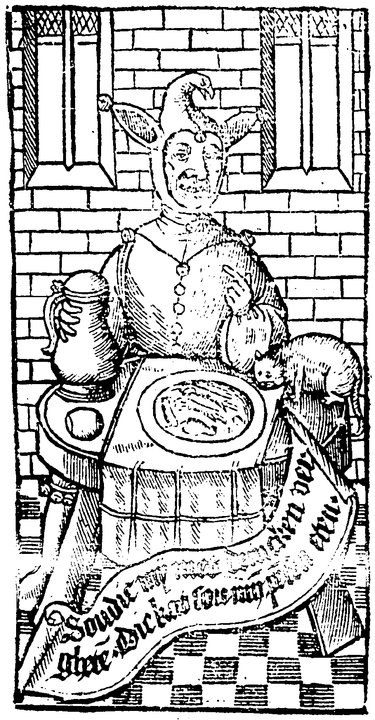
While I provided a descriptive rather than amusing caption, I thought the image amusing in its own right. Since it was a Wednesday, I used the hashtag #WoodcutWednesday, and, thinking myself clever, posted several more images that day. A few weeks later, after discovering the beauty of the Hyperotomachia Poliphili and its scandalous woodcuts, I decided to revive #WoodcutWednesday, posting this as my first image and caption:
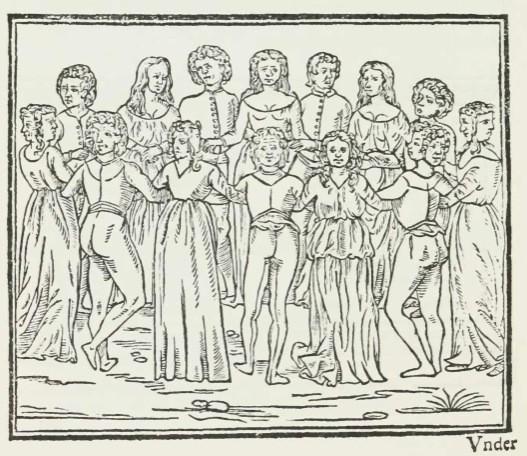
I started posting #WoodcutWednesdays thinking I was only amusing myself. But with early encouragement from the always hilarious @Exhaust_Fumes, and a later shout-out from @Erik_Kwakkel, I found that others enjoyed them and decided to make #WoodcutWednesday a semi-regular thing. Every week since, I have tried to Tweet #WoodcutWednesday images with silly captions. Sometimes I come up with amusing ones and oftentimes I produce joke captions that fail, but they still have become the highlight of my week.
I had hoped that other early modernist would join in the fun to provide better captions than I could, and/or that other early modernists would Tweet their own funny or bizarre #WoodcutWednesdays, but, so far, I’ve been Tweeting alone. Having for a long time thought I was speaking to a select few of weekly responders, I discovered this week that there were other people on Twitter who enjoy the #WoodcutWednesday Tweets.
Last week, when the image of a medieval manuscript with cat paw prints reemerged as a viral sensation, I thought it would be funny to superimpose the ubiquitous Grumpy Cat on the image and create a few library related Grumpy Cat memes and posted them to my blog. To my delight and horror, the Medieval MSS Grumpy Cat blog post has garnered more views and shares than my entire blog had previously. When visiting several sites that linked to my silly Blog entry, I came across one that lamented the lack of early modern memes. It certainly is true that the medievalists of Twitter are winning the Twitter image war, and we early modernists have largely refused to take up a challenge.
As a result, I issue a challenge to the early modernists of Twitter to use #WoodcutWednesday as a way to battle back against the medieval dominance of these purveyors of illuminated medieval manuscripts. Dear early modernists, we cannot allow… a Twitter image gap!
In the next week or so, I will try to repost some of my earlier #WoodcutWednesday images to my as-of-right-now-defunct-Tumblr. But challenge issued, and I hope someone will answer the call. Even if no one else wants to pick up the gauntlet, I will still amuse try to amuse myself with #WoodcutWednesday, but game on, medievalists.
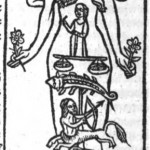
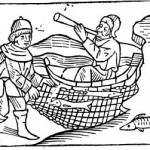
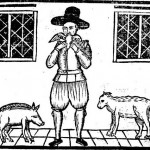
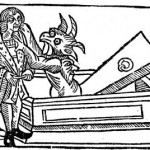
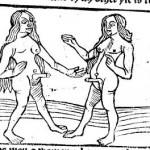
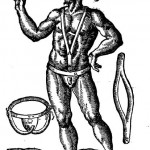
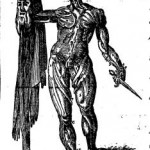
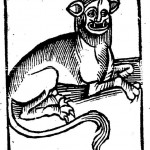
With that, I leave you with a few of my #WoodcutWednesday favorites.
Where Cited
This essay has shaped the following works.
- Jon Crabb. Graven Images: The Art of the Woodcut. London: British Library, 2017. Cited in Acknowledgements. Thanks Senseshaper for starting #WoodcutWednesday on Twitter. Read on Google BooksBuy on Amazon
Help me AND take money out of Amazon's hands by purchasing through my link.
Here endeth this leaf of Shaping Sense, called We Cannot Allow This Twitter Image Gap! An Early Modern #WoodcutWednesday Challenge. Imprinted by Senseshaper Press at senseshaper.com, firſt ſet forth the twenty-third day of February, 2013. Free to read, ſhare and cite under CC BY‑NC 4.0. Finis.

Cite as
Fisher,
Zachary [Senseshaper].
“We Cannot Allow This Twitter Image Gap! An Early Modern #WoodcutWednesday Challenge.”
Shaping Sense,
23 Feb. 2013,
senseshaper.com/we-cannot-allow-this-twitter-image-gap-an-early-modern-woodcutwednesday-challenge.
Short form: Senseshaper, “We Cannot Allow This Twitter Image Gap! An Early Modern #WoodcutWednesday Challenge.”